



The following is a scheme for floating point number representation using bits.
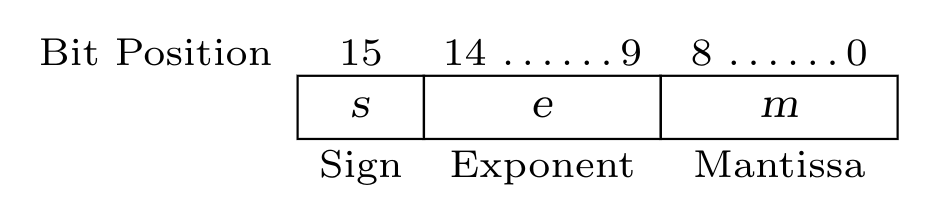
Let and be the numbers represented in binary in the sign, exponent, and mantissa fields respectively. Then the floating point number represented is:
What is the maximum difference between two successive real numbers representable in this system?
View worked solution
Answer: C
For a fixed exponent , the value of the floating-point number is given by:
Two successive representable real numbers with the same exponent differ by a single unit in the least significant bit of the mantissa (i.e., ).
The difference between these two successive numbers is:
To maximize this difference, we must choose the maximum possible value for the exponent . Since is a -bit field, its values range from to .
According to the given condition, the exponent cannot be . Thus, the maximum valid exponent is .
Substituting into the difference formula:
Free practice · Your answers on this page are not saved.